ACHES has been set up to promote, enhance, and protect human and environmental wellbeing. ACHES provides a forum to highlight and advance the truth about legal, medical and scientific information relating to current and emerging technologies. Our ‘Weekly Picks’ summarise the most relevant news pieces from our partners and collaborators to raise awareness of the health harms caused by such technologies, and offer much-needed solutions to enhance our health.
European Court of Human Rights Application re: EMFs
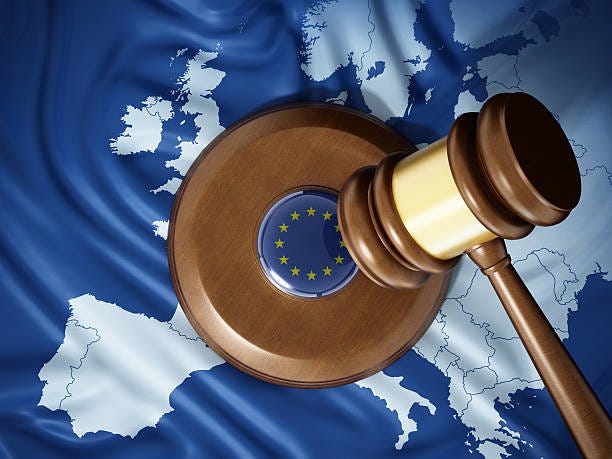
Eileen O’Connor of the EM Radiation Research Trust has highlighted that a joint application has been submitted to the European Court of Human Rights on 25 August by Neil McDoughall and Karen Churchill. When a phone mast is placed close to people’s homes, schools and communities, residents should be able to expect that their concerns about public health will be taken seriously. What happens when residents raise those concerns, provide evidence and seek answers through the UK system, yet still believe they have no effective remedy? They take their case to an international court. This application to the European Court of Human Rights by Neil McDougall and Karen Churchill brings this fundamental issue into sharp focus. The application McDougall & Churchill v United Kingdom raises important questions about telecommunications infrastructure, public health protection, legal certainty and access to an effective remedy. Why are residents having to look beyond the UK to seek an effective remedy when the people and institutions responsible for protecting the public should be addressing these concerns at home? The application examines whether the UK’s legal and regulatory framework provides adequate protection when telecommunications infrastructure is proposed, particularly where site-specific public health concerns and relevant evidence are raised. The applicants’ case concerns a wide framework for public health protection, including who is responsible, what evidence should be considered, as well as how those responsibilities should be exercised. It also offers suggestions for what remedy is available when they are not properly addressed. See more details about their human rights application here.
Protests in Scotland About AI Data Centres
On Thursday 3 September last week, around two hundred people gathered outside their local area in Holyrood to protest about an AI data centre being planned for their local area. In parliament Scottish Green Co-leader Ross Greer called for all data centre applications over 50MW to be paused until Scotland has a clear national strategy and robust criteria for deciding which projects should go ahead. An earlier announcement that the Scottish Government plans to attract even more data centres has been a devastating blow to the local communities. Read more about this story here.
Blood Parameters and Stress Indicators Near Phone Masts
In her Substack, Patricia Burke for Safe Tech International features a paper by a scientific team that examines the effects of exposure to nearby mobile phone base stations (MPBS) on human blood parameters. Collectively, the study data show that radiofrequency electromagnetic fields (RF-EMFs) from mobile phones and MPBS can differentially impact leucocytes that indicate biological stress and detrimental effects on health. The study aimed to test whether people who live close to MPBS or have high mobile phone usage show changes in their red and white blood cells and stress hormone levels. The data indicate that human biological systems are under stress from exposures to mobile phones and MPBS. See here for further information.
Bill Restricting License Plate Readers Should Extend to Smart Meters
On 8th September, Patricia Burke highlighted the Flock-Off Act, which explicitly preserves federal funding for automated license plate readers used for one narrow purpose: collecting or enforcing tolls. While license plate readers used to crack down on crimes, such as smuggling and trafficking are justified, their uses for cashing in are not. As Patricia notes: another surveillance infrastructure initiative requires scrutiny. In Ohio, SWORT (SW Ohio for Responsible Technology), has drawn attention to the fact consumers are paying for grid infrastructure that is of no benefit to them, and actually rewards high usage consumers with discretionary load, such as a pool pump or an EV charger. Despite growing opposition, Ohio lawmakers and proponents are still endorsing House Bill 427, a controversial bill, which involves demand response programs, and smart thermostats. Connected thermostats are linked with data privacy and surveillance concerns, cybersecurity vulnerabilities, and radiofrequency exposure. It is important to raise awareness of the so-called ‘smart grid’ and its relationship with all the data related to premise appliances and devices”. Read more on this detailed post here.
CHD Advocating for Safer School Tech
The Children’s Health Defense (CHD) has produced a video that provides strategic, simple steps for advocating on behalf of children with school staff and administrators to ensure that technology is used safely outside the home. Parents have the power to influence and ensure that steps are taken in schools to help change policy and practices in classrooms. Stephanie Lucreccio from CHD talks with Cece Doucette, the Director of Massachusetts for Safe Technology and the co-founder of Safer Screen Time. View the interview to learn more here.
Supporting ACHES
ACHES is a not-for-profit organisation that is funded by donation, and not supported or influenced by any sector of industry or government. If you have enjoyed this post and others, please share this information with as many people as possible, and subscribe to the ACHES Substack. To donate to ACHES, please see the homepage. Another way to support our mission and campaigning work is by purchasing apparel from Freedomforlifeshop.com. See also the website Stress Less World that provides access to a wide variety of apparel and other merchandise, which you can customise – for example, with inspiring thoughts from sages around the world – and help support ACHES in the process.